|
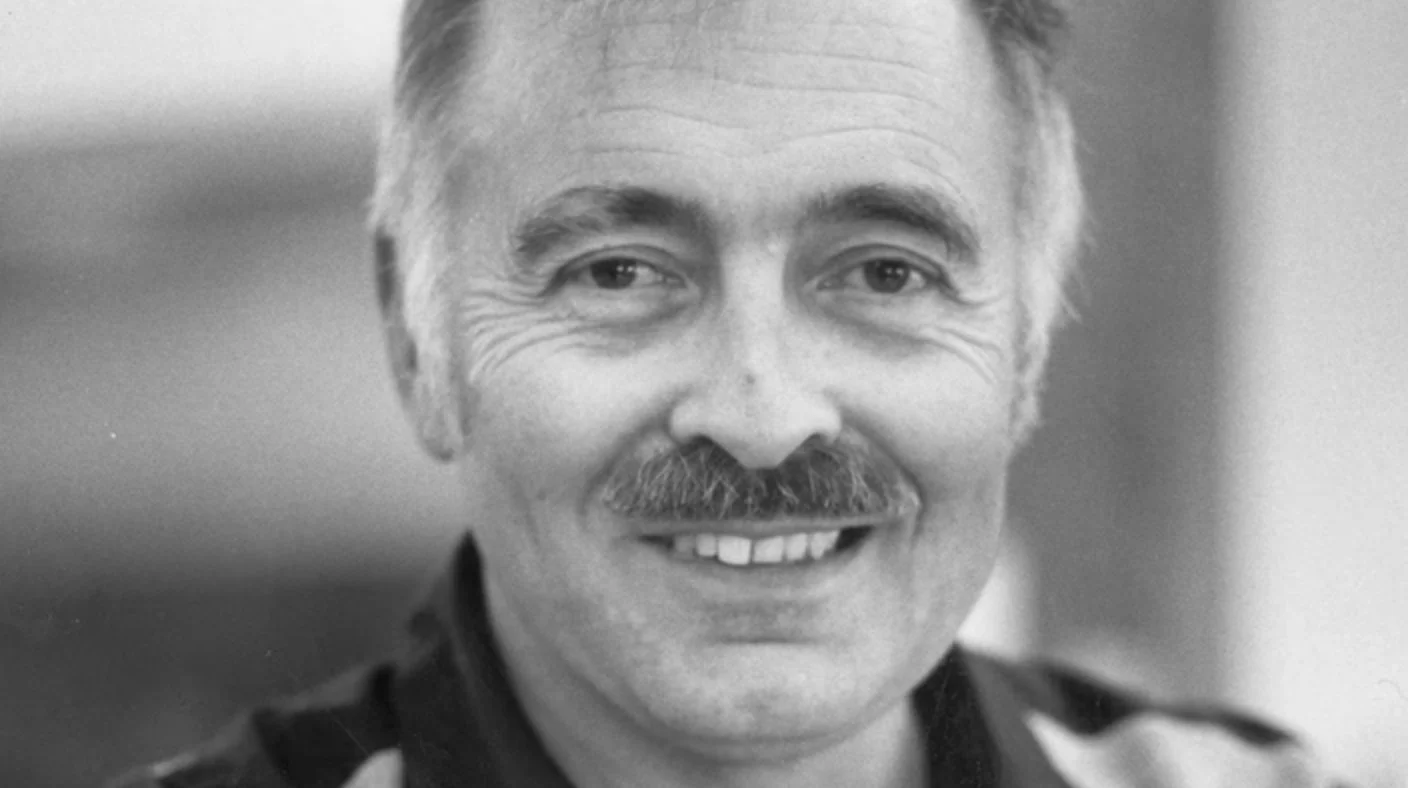
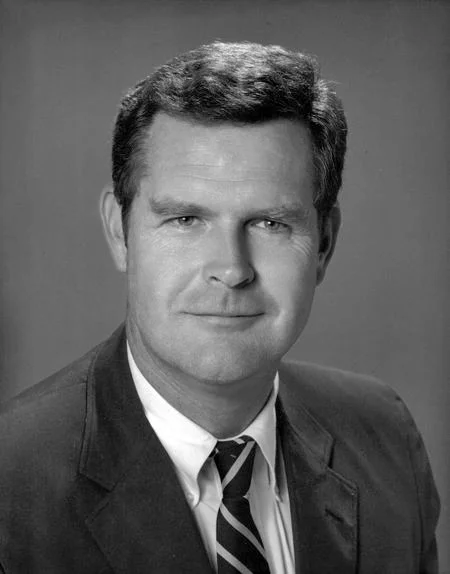
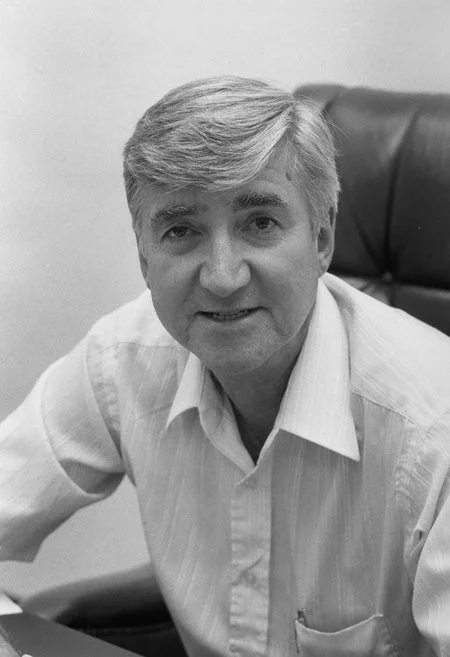
Wheeler
J. North
19222002

Wheeler J.
North, professor of environmental science, emeritus, died on December
20. He was 80.
Born in San Francisco, North moved with his family soon afterward to San
Diego, where he began exploring tide pools at the age of seven. He also
developed an early interest in kelp beds, which would turn out to be his
lifes work.
North received
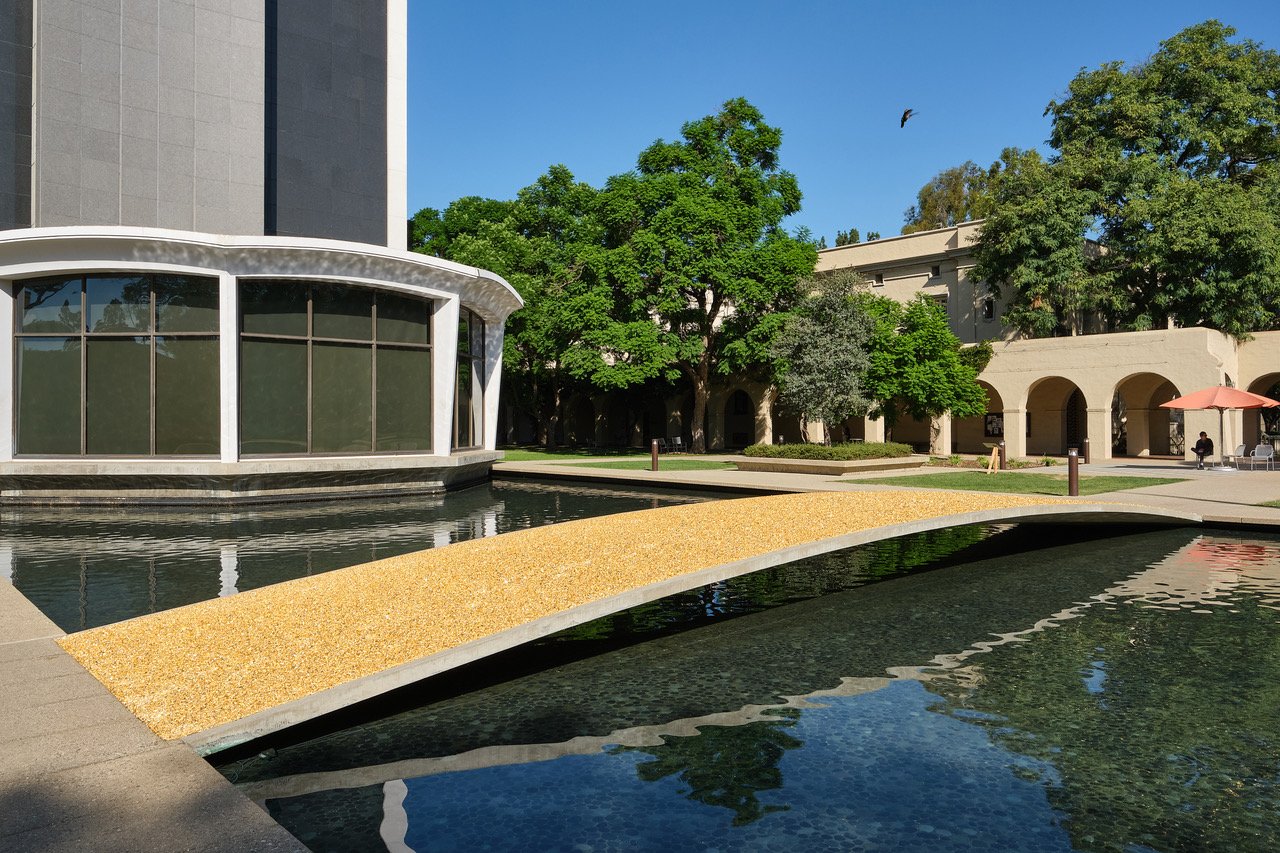
his first BS (in electrical engineering) from Caltech in 1944, then returned
to Pasadena after the war to earn a second one, in biology, in 1950. His
MS and PhD are from the University of California (1953). After several
years at Scripps Oceanographic Institution, he returned to Caltech in
1962, first as visiting professor of biology, then as associate professor
of environmental health engineering, and finally as professor of environmental
science.
Although
he taught a popular marine biology course (among others) on campus, North
spent much of his time working out of Caltechs Kerckhoff Marine
Laboratory in Corona del Mar, studying the complex ecosystem of the giant
kelp (Macrocystis pyrifera) off the California coast. He determined
that the kelp beds were shrinking as sewage fed the sea urchin population,
which in turn fed on the kelp. He also studied the effect of humans on
kelp, in particular the warm-water discharge from the San Onofre nuclear
power plant, which deterred kelp development; and oil spills, an environment
in which kelp thrive. He devised techniques for restoring and farming
kelp forests.
North was
one of the pioneers of scuba diving for scientific research, making his
first dive in 1949. He purchased one of the first 10 Aqua-Lungs sold in
the U.S.; since wet suits did not yet exist, he put on woolen underwear.
In 1972 North
described his work to National Geographic: At days
end, I often relax by lazily roaming
the upper branches of the tall forest where I work. Creatures bizarre
and beautiful swarm about me. Overhead, the tangled foliage almost obscures
the daylight. But I need no tree climbing irons; only swim fins. The air
I breathe is carried on my back. I am a scuba forester and the trees
I tend are giant vine-like streamers from the ocean floor off Southern
California.
A memorial
service was held on February 22 at the Ocean Science Center in Dana Point,
where friends, colleagues, students (including five of his ten PhD students),
and family gathered to reminisce and tell Wheeler stories.
Chuck Mitchell, president of MBC Applied Environmental Sciences, who organized
the occasion and presided over it, told of meeting North in 1955, after
lying about his age (I told everyone I was 16) to get a summer
job at Scripps. He was unique, said Mitchell. He had
life-changing, life-directing effects, and we probably didnt even
know it at the time. We have all been spread over time and space, and
Im glad that we have the opportunity to get together here today
to compare notes on this phenomenon.
Mitchell,
who was also one of the pioneer divers, recalled his friends optimism,
curiosity, and patience; the stratigraphy of his desk, files,
and storerooms. With slides as illustrations, he reviewed some of Norths
familiar characteristics (to much amused laughter): his early, self-made
diving gear, his shoes with flapping soles, the patches on his wet suit
(he used to hold his suit together with bits of old underwear), his string
of decaying, uncared-for automobiles and boats, and an ancient tuxedo
with a hole in the knee (he was going to paint his knee but got
the hole mended).
Jim Morgan,
the Goldberger Professor of Environmental Engineering, Emeritus, had a
very clear memory of his job seminar as a prospective faculty
member in 1965: Sailing along talking about particles and polymer
chemistry and God knows what else, I happened to look down at the first
seat in the front row, only to see Wheeler sound asleep! I wondered, was
my future academic fate already sealed? He was assured by a colleague
afterward that Wheeler always slept through seminars (I think its
all that scuba diving), and that was the beginning of a 38-year
beautiful friendship. And reciprocityWheeler would sleep
through most of my seminars, and I would sleep through his.
Morgan noted
Norths visionary pursuit of an idea for kelp farms
for energy generation, and another idea (on which Morgan had collaborated
as an aquatic chemist) for forming carbon dioxide hydrate solids in seawater,
which North envisioned as a potential process for storing carbon dioxide
from combustion in power plants in deep coastal waters. Morgan also showed
slides, including the E&S cover shown on the previous page,
and the 1972 National Geographic cover (when very few people
were even using the words environmental science); also
pictures of North obliterating sea urchins with a hammer,
introducing new Caltech undergrads to his ice chest full of sea creatures
at Freshman Camp, and dressed in a tuxedo as Morgan accepted the Clark
Award three years ago.
Another pioneer
diver, who became Scrippss diving officer and helped spread the
techniques of scientific diving, was Norths friend Jim Stewart.
He joined Scripps as a volunteer diver in 1952 and helped start the kelp
study project with Northover the years weve moved a
lot of kelp. He told anecdotes of storms and rescues in the Orca,
a converted yacht, and fishing for dinner off the back of the boat. Wheeler
and I worked together on a lot of projects, conducted an awful lot of
studies, and had a lot of fun, said Stewart.
One of his
fondest remembrances was what Stewart called the Tampico days.
In 1957, the Tampico Maru, a 360-ft. tanker out of San Pedro, went one
degree off course, and put that thing right up there on the rocks
at 4 a.m., spilling about 20,000 barrels of diesel oil into a small
cove. North and his team arrived soon thereafter to study what happened
to the marine life and found that the oil killed all the animals that
grazed on the kelp, allowing a vast kelp forest to flourish. North and
his colleagues studied its growth, and published the first data in 1964
and several papers thereafter.
Compared
to other spills, the Tampico Maru was right up there with themhuge,
said Alan Mearns, senior staff scientist with NOAA (National Oceanic and
Atmospheric Administration). It was the largest diesel spill on
the West Coast and the first spill followed by longterm biological monitoring.
Before leaving for NOAAs oil spill team in Seattle, Mearns had worked
with North in the 70s on the Southern California Coastal Water Research
Project, surveying the coast for water pollution from Point Conception
to the border.
When Mearns
and North ran into each other again in 1997, Mearns realized what
a wealth of data North had collected in the aftermath of the Tampico
Maru. This was an important spill because it was a diesel spill.
We had very few cases of documented diesel spill and effects, and here
we had 20 years of documented study. North got his unpublished data
together, and NOAA will shortly publish a technical memo under Norths
name on the 20-year history of records from the Tampico Maru. I
have to help finish this particular part of the story that Wheeler began,
Mearns concluded.
Lee Peterson,
BS 64, MS 66, PhD 74, was a graduate student of Norths,
whom he credited with the inspiration to learn to fly, as well as dive
(flying was another passion of Norths). He fondly recalled flying
out to a site, diving, then getting on the airplane again and going up
to 10,000 feet. Thats really a no-no, he said. Sometimes
my nails were getting blue. He spoke of towing kelp plants from
Newport to Palos Verdes and tying them to chains underwater. The air in
the crews tanks lasted about 45 minutes, but Wheeler would
be out for two hours on one tank, said Peterson. To this day,
I dont understand how he could last so long. But he was so relaxed,
and he loved being down there so much, maybe he just didnt breathe.
Norths
family joined in the remembrances. Brother-in-law Dennis Moyer (whose
remarks were read in his absence by his wife, Elizabeth Best Moyer) offered
his own brushstroke to the other elegant, revealing,
and often humorous brushstrokes that create this most personal portrait
of Wheeler. Moyer remembered Norths impishly fine wit
and loved the fullness and patient clarity with which he answered
my questions about his work. He also noted his selfless devotion
to their mother-in-law toward the end of her life. I, we, will be
eternally grateful for his singular sense of familial duty, friendship,
and love.
Norths
wife, Barbara, described the family airplane. When he couldnt
get anyone else to photograph the kelp beds from the air, he went
and bought an airplane, and Barbara got her own pilots license
before she would set foot in it. When he realized that its hard
to take pictures from a low-wing plane, North cut two huge holes
in the bottom of the plane, one under each seat, so you could look down.
I dont think the FAA ever knew what we had done to this plane.
Like several
of the other speakers, Barbara had met Wheeler at the Scripps student
summer program, where she also dove to study the kelp beds and hung around
to spend thousands of hours underwater. Eventually, Wheeler incurred
the displeasure of some of the senior research staff at Scripps by pointing
out to them that perhaps it was more effective to actually go into the
kelp bed and study it instead of sitting on a boat deck and speculating
about it. Caltech understood that perhaps the direct approach was better
and stole him away from Scripps. He was forever grateful about that.
When
I was a kid, said Norths son, also named Wheeler, if
you were going to do something with Pop, that meant that you got stuck
in the back of an [open] truck on top of a big pile of gear and ropes,
and you were tied in and spent four or five hours watching the world go
by backwards. And eventually, you got to some really neat place and spent
a couple of weeks running around, but learning a lot about life and science.
His father, he said, exuded happiness and brought out happiness in others:
We would walk down the street, and people would walk by and just
start smiling.
Wheeler North,
Sr., loved limericks, so his son read a long limerick that he had composed
for the occasion, A Poem of a Sort about Wheeler J. North,
which began: There once was a man named Whee/ Deep secrets he teased
from the sea. . . . and went on to tell the story of his fathers
life in numerous, humorous stanzas.
At the end
of the ceremony, it was announced that the Southern California Academy
of Sciences was establishing the Wheeler North Award for Scientific Excellence.
The recipient of the Wheeler North Award will have demonstrated
commitment to research that emphasizes the Southern California area and
a commitment to the Southern California scientific community. JD
|