| 
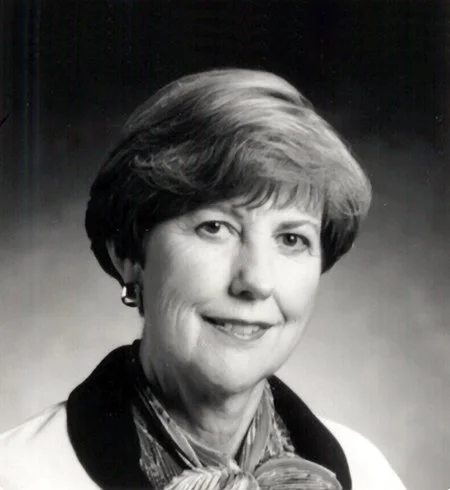
Edward
B. Lewis
1918 – 2004
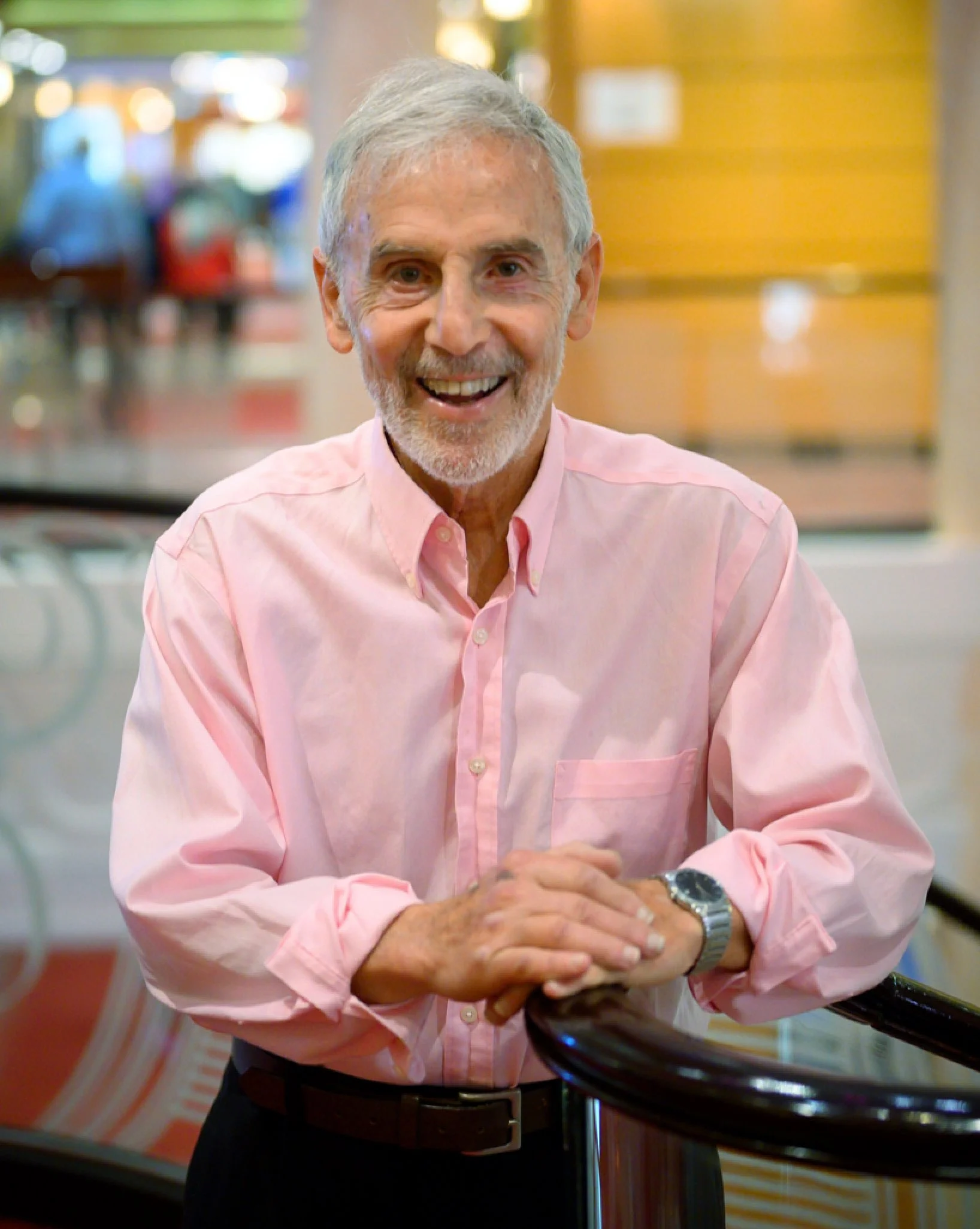
Edward Lewis, the Morgan Professor of Biology, Emeritus,
died July 21 after a long battle with cancer; he was 86. Lewis worked
on the genetics of the Drosophila fly for almost 70 years, 61
of them at Caltech, and was engaged in active research until the final
months of his illness. He also played a key role in the debate on nuclear
testing in the ’50s. Caltech president David Baltimore called him
“one of the true masters of genetics, the bridge between the pioneers
of Drosophila work—Morgan, Bridges and Sturtevant—and
modern developmental biology.”
Lewis was awarded the 1995 Nobel Prize in Physiology or
Medicine for discovering a group of master control genes that orchestrate
the development of a fly embryo’s body parts, and for showing that
these genes are strung along the chromosome in the same order, from head
to tail, as the body parts that they control. These same genes, containing
almost identical stretches of DNA, have since been found in all other
animals, including humans: a strategy for development that gave rise to
the first primitive marine animal over 550 million years ago had been
preserved by all the invertebrates and vertebrates descended from it.
Lewis, who worked on a group of genes called the bithorax complex, shared
the Nobel Prize with Eric Wieschaus and Christiane Nüsslein-Volhard,
who identified genes that work at an even earlier stage of development.
Prior to his Nobel Prize, Lewis had received the Wolf Prize in Medicine
in 1989 and the National Medal of Science in 1990, among many other honors.
Lewis championed the value of basic research for its own
sake, and stressed that he hadn’t set out to make the discoveries
that led to his awards; he was simply trying to find out how genes worked,
what they were made of, and how new genes could arise from old. By being
allowed to do his research without having to justify its health benefits
to funding bodies, he had (“by many circuitous routes”) contributed
toward the understanding of human congenital malformations.
He loved the abstraction of genetics, which “allows
one to deduce many properties of genes without any knowledge of what they
are made of.” In fact, for the first 20 years of his research, genes
were thought to be proteins—which turned out to be completely wrong.
But it didn’t affect his results, because “the laws of genetics
have never depended upon knowing what the genes are chemically and would
hold true even if they were made of green cheese.”
The four-winged fly (normal flies have only two wings,
the second pair having evolved into gyroscopic knobs called halteres)
that became the visual icon of his work was one of the most striking bithorax
mutants. But it was “just a stunt,” Lewis said, “a byproduct
of the theory we were testing.” (A modest man who disliked self-aggrandizement,
he always used “we,” even when he had done all the work himself.)
After working on four-winged flies, flies with stunted halteres, flies
with legs in the wrong place, and many others for 32 years, he finally
published, in 1978, “his miraculous paper,” said longtime
colleague Howard Lipshitz, “that laid out a paradigm for the genetic
control of development.” Lewis’s work united three separate
disciplines of biology—genetics, developmental embryology, and evolution—into
one.
Born May 20, 1918, in Wilkes-Barre, Pennsylvania, where
his father was a watchmaker, Lewis loved the wildlife that lived near
the banks of the Susquehanna river, especially the insects, toads, turtles,
and snakes. After reading about the work of Morgan and Bridges on Drosophila
at Caltech, he spotted an ad in the back of Science for cultures
of the flies at $1 each. Seventeen-year-old Lewis and schoolfriend Edward
Novitski scraped up some money, ordered a few tubes, and spent their spare
time in the high school biology lab breeding the tiny flies, sorting through
their offspring with magnifying glasses, and analyzing the results. Lewis,
a talented flutist, gained a music scholarship to Bucknell College, but
transferred to the University of Minnesota (chosen for its low out-of-state
tuition fee of $25) after a year. It was a lucky choice: genetics professor
C. P. Oliver encouraged the undergrad to carry on with his Drosophila
hobby at a desk in his lab. Lewis worked on a new mutant sent by Novitski
(who also became a geneticist; PhD ’42) from Purdue.
After earning a BA in biostatistics (’39) in just
two years (a zoology degree would have taken a third, unaffordable, year),
a recommendation from Oliver landed Lewis a teaching fellowship at Caltech
as one of Sturtevant’s graduate students. He discovered a way to
tell if two recessive genes were on the same gene or on two different
ones, the cis-trans test, an important new technique for genetic
analysis that won him his PhD in 1942.
He now had
to enlist for war service, but president Robert Millikan guaranteed him
an instructor’s job afterward. Lewis took the Caltech-based U.S.
Army Air Corps meteorology course (MS ’43) and was sent to Hawaii
and Okinawa as a weather forecaster. The year he came back to Caltech,
1946, was also the year he married Pamela Harrah, a Stanford graduate
trained as a scientific illustrator. She was working in George Beadle’s
lab in Stanford that year, but Beadle was moving to Caltech and he wanted
her with him to look after his Drosophila stock collection. Son
Hugh Lewis, speaking at a memorial service last October, takes up the
story: “One day [Beadle] looked at Pam and said, ‘Pamela,
how tall are you?’ ‘Five foot four,’ she replied. And
he said, ‘Well, there’s a nice young man at Caltech, and he’s
also kind of short (Lewis was about five foot two); his name’s Ed
Lewis. You could meet him, he’d fall in love, and you could get
married.’” It worked.

Lewis’s
love affair with Drosophila (he didn’t like it referred
to as a fruit fly) began in 1935 and continued through 1964, above, and
beyond. He numbered his genetic crosses sequentially from the day he started
his research, and ended at number 53,446.
Lewis
published infrequently, often in obscure journals, and his papers were
difficult to read, according to Lipshitz, whose book Genes, Development
and Cancer: The Life and Work of Edward B. Lewis was published a
few months before Lewis’s death. “His publication rate would
be considered atrocious by most grant review panels or academic promotions
committees.” Seymour Benzer, Boswell Professor of Neuroscience,
Emeritus, once joked, “Ed is a maverick who could never survive
in a normal institution.” Lewis was also unusual in that he worked
alone. “The number of postdocs he had in 60 years could be counted
on one hand, and the number of graduate students was even less,”
Lipshitz wrote. “Ed continued to do science for himself his whole
life.”
Yet he wasn’t antisocial. Speakers at the Caltech
memorial service recalled him as friendly, collegiate, kind, and caring.
Provost Paul Jennings remembered more than 40 years of lively lunchtime
discussions with him at the Athenaeum faculty table (Lewis came into work
very early, and left very late, but was a popular lunchtime regular.)
Jennifer Caron (BS ’03), whose senior thesis, “Biology and
‘The Bomb’” (published in E&S, 2004, no.
2), was about his important role in highlighting the health risks of above-ground
nuclear-bomb tests, recalled his patience and helpfulness, and how, when
she visited his room on the top floor of Kerckhoff, he would “move
a stack of papers, rearrange the journals and bottles of fruit flies,
and offer a chair.”
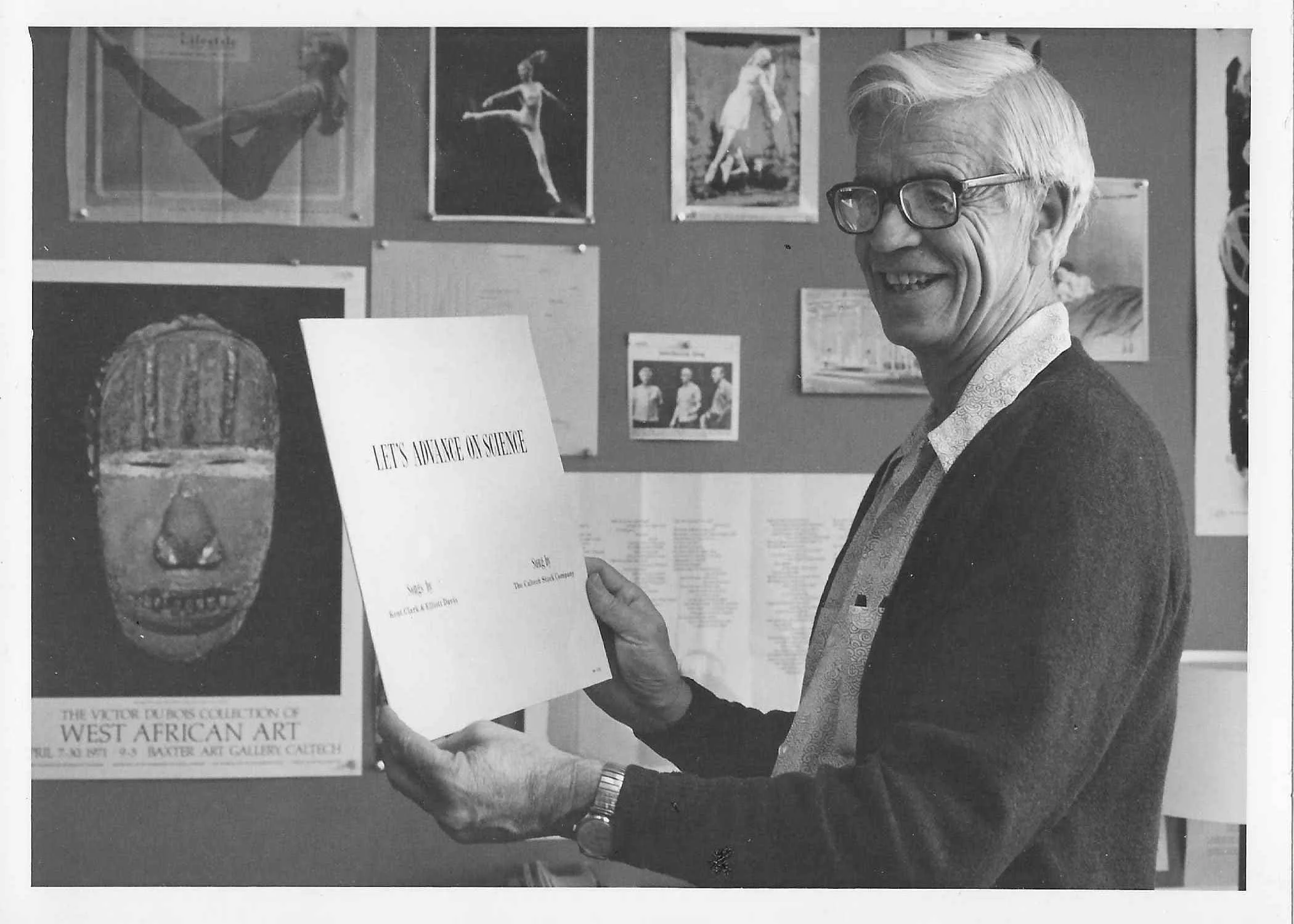
Lewis loved art, and was renowned for his Halloween costumes;
he would come to parties as a painting, often a Magritte. Always a keen
flute player, he arranged chamber music sessions with friends, took part
in Caltech musicals, and fit in lessons from San Francisco opera flutist
Patricia Farrell (who performed a short piece at the end of the memorial
service) when in the Bay Area for the opera season.
The Lewis family pets weren’t the furry kind, recalled
Hugh. Desert tortoises roamed the backyard of the family home in San Marino,
and octopuses lived in large tanks inside. He was one of the first to
get them to breed in captivity.
Lewis became professor of biology in 1956, was named the
Morgan Professor of Biology in 1966, and became an emeritus in 1988. With
the advent of molecular biology in the ’60s, bacteriophages and
bacteria were in favor. Lewis, still working with flies, became an anachronism.
But when David Hogness (BS ’49, PhD ’53), Welcome Bender (PhD
’78), and others decided to clone a higher organism, they chose
the bithorax complex of Drosophila because of Lewis’s detailed
knowledge of this area and his outstanding collection of mutants, which
he generously lent them. When the positional cloning was complete, “the
physical map of the bithorax complex corresponded perfectly with the genetic
map,” Lipshitz wrote, “validating over 35 years of Lewis’s
genetic results.”
Worried about above-ground nuclear testing in the ’50s,
Lewis challenged the current dogma that exposure to low amounts of ionizing
radiation didn’t damage human tissues. As told in “Biology
and ‘The Bomb,’” he calculated the relationship between
radiation doses and leukemia using publicly available data, and published
the results in Science in 1957. His conclusion that even small amounts
of radiation caused leukemia created such a stir that he was summoned
to appear before a congressional joint committee on atomic energy. Despite
the grilling they gave him, he continued to publish on radiation risks
for another 20 years. “Ed has a permanent place in the history of
radiation and chemical protection policy in the U.S.,” James Crow,
of the University of Wisconsin–Madison, said at the memorial service.
“This is not the work he won the Nobel Prize for, but maybe as far
as public policy is concerned, it might be the most important work he
did.”
Lewis is survived by his wife, Pamela, and two sons, Hugh,
an attorney, and Keith, a biologist. A third son, Glenn, died in his early
teens in a mountaineering accident.
“Ed did science because he loved it, rather than
for fame and fortune,” said Andrew Dowsett (BS ’74), “and
when it brought him fame anyway, one could only smile and think that sometimes,
nice people do finish first.” –BE
|