

California Institute of Technology
Engineering & Science
05.16.12

Random Walk

Antenna Galaxy

The pair of colliding galaxies known as the Antennae, as seen by (from left to right) today’s visible, infrared, and submillimeter telescopes. CCAT will see the dust-shrouded star-forming regions that the CSO sees, but with Spitzer’s spatial resolution.

The MKIDS Are Alright

“Build CCAT!” the decadal survey says. That’s the U.S. National Research Council’s sixth decadal survey for astrophysics and astronomy, released in August. These surveys predict the greatest scientific opportunities and rank proposed research projects accordingly. The outlined projects offer the best prospects “for making discoveries—both anticipated and unanticipated—for which the next decade will be remembered.” CCAT—a telescope initiated by Caltech, JPL, and Cornell that is slated for construction in the high-altitude Atacama Desert in northern Chile—was listed as a top priority for its part in the search for the first stars, galaxies, and black holes.

“The first two billion years of the universe will open up in the next decade,” predicts Chuck Steidel (PhD ’90), Caltech’s DuBridge Professor of Astronomy. “CCAT has a starring role: it is the only telescope that can survey the dustiest and most luminous galaxies in the primordial universe. We expect some big surprises.”

Astronomers have wanted a telescope like CCAT since the 1980s, when the Caltech Submillimeter Observatory (CSO) began to reveal dust clouds packed with embryonic stars in nearby galaxies. These clouds look dim or black to optical telescopes, but they blaze in the submillimeter- and millimeter-wavelength light that the CSO and CCAT are designed to see. This light falls between radio waves on the one side and near-infrared and visible light on the other. To see well at these wavelengths—just out of the reach of radio and optical telescopes—completely new cameras and spectrometers had to be developed.

This light may be tough to work with, but it holds the key to understanding galaxy formation. If star-forming regions are thick with dust, primeval galaxies may also be hidden by the dust and gas of their own formation. CCAT will survey huge swaths of sky at great depths, essentially looking back in time by catching photons that have been traveling for more than 10 billion years. Its superb site and 25-meter dish—more than twice as large as the CSO’s—are big factors in its observing power. But the real revolution is down in the bowels of the telescope.

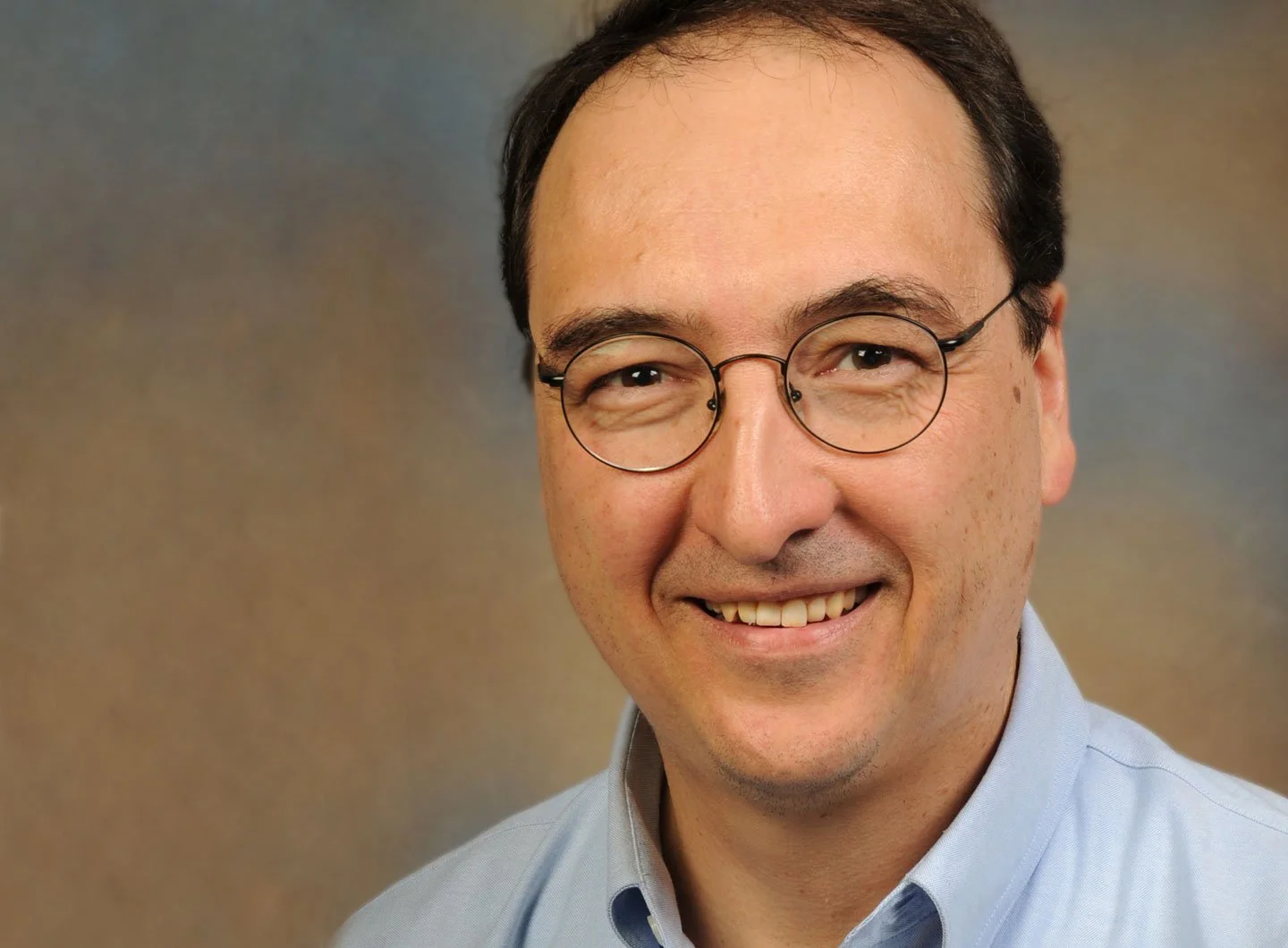
It has taken three decades of dogged work, false leads, and lucky breaks to develop the technology for CCAT’s wideband spectrometer and its large-format cameras. E&S discussed this journey of a thousand steps with Jonas Zmuidzinas (BS ’81)—the Kingsley Professor of Physics, Caltech’s project scientist for CCAT, and a leader in detector development.

“So far, we have gotten just a small taste of what there is to learn at submillimeter wavelengths,” says Zmuidzinas. Studying a submillimeter-bright galaxy often requires three telescopes. You need a submillimeter telescope to find the object, a radio telescope to pinpoint its location, and an optical spectrometer to analyze its chemistry and measure its redshift, which determines its place on the cosmic time-line.

CCAT will be able to do all of these things. Its spectrometer, the next generation of an instrument called Z-Spec, will have unprecedented bandwidth and be able to target multiple objects simultaneously. It will routinely find redshifts for distant, dust-obscured galaxies rich with new stars. Its cameras, using microwave kinetic inductance detectors (MKIDs), are expected to bring the state of the art from a few thousand pixels to many tens of thousands of pixels and beyond. They will capture detailed panoramas of the submillimeter sky.

Caltech and JPL were central to development of the new detectors. That’s not because of one or two people—quite the opposite. In this small community, ideas fly from undergraduates to senior researchers to trustees to alumni (don’t try to keep track of all the characters that follow!). Here, a good idea can generate the nimble collaboration more typical of a pro sports team—each player, aware of the skills and resources of the others, contributes what he or she can, whether it’s a new method, a better production facility, a timely infusion of funding, or a novel design.

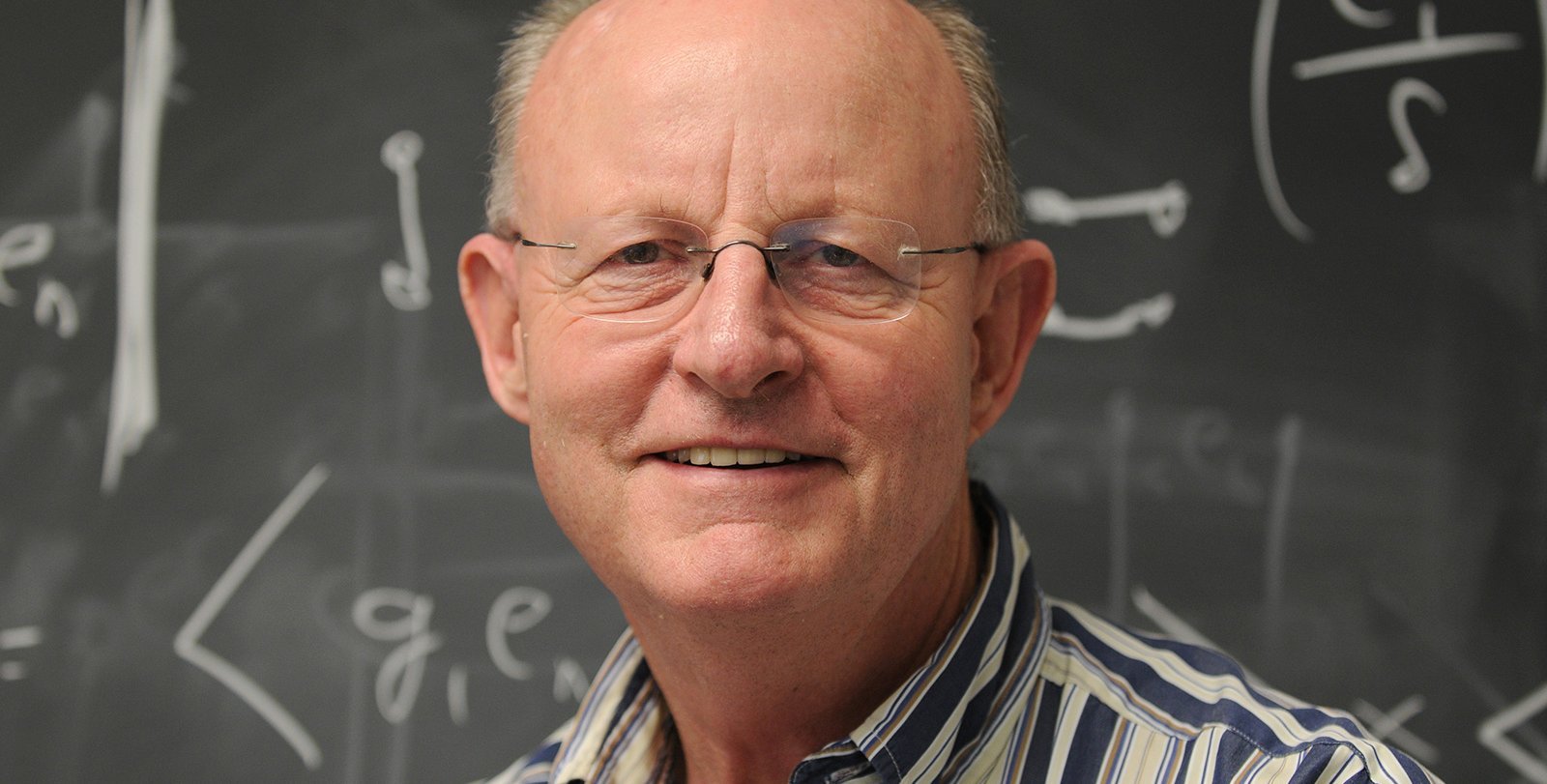
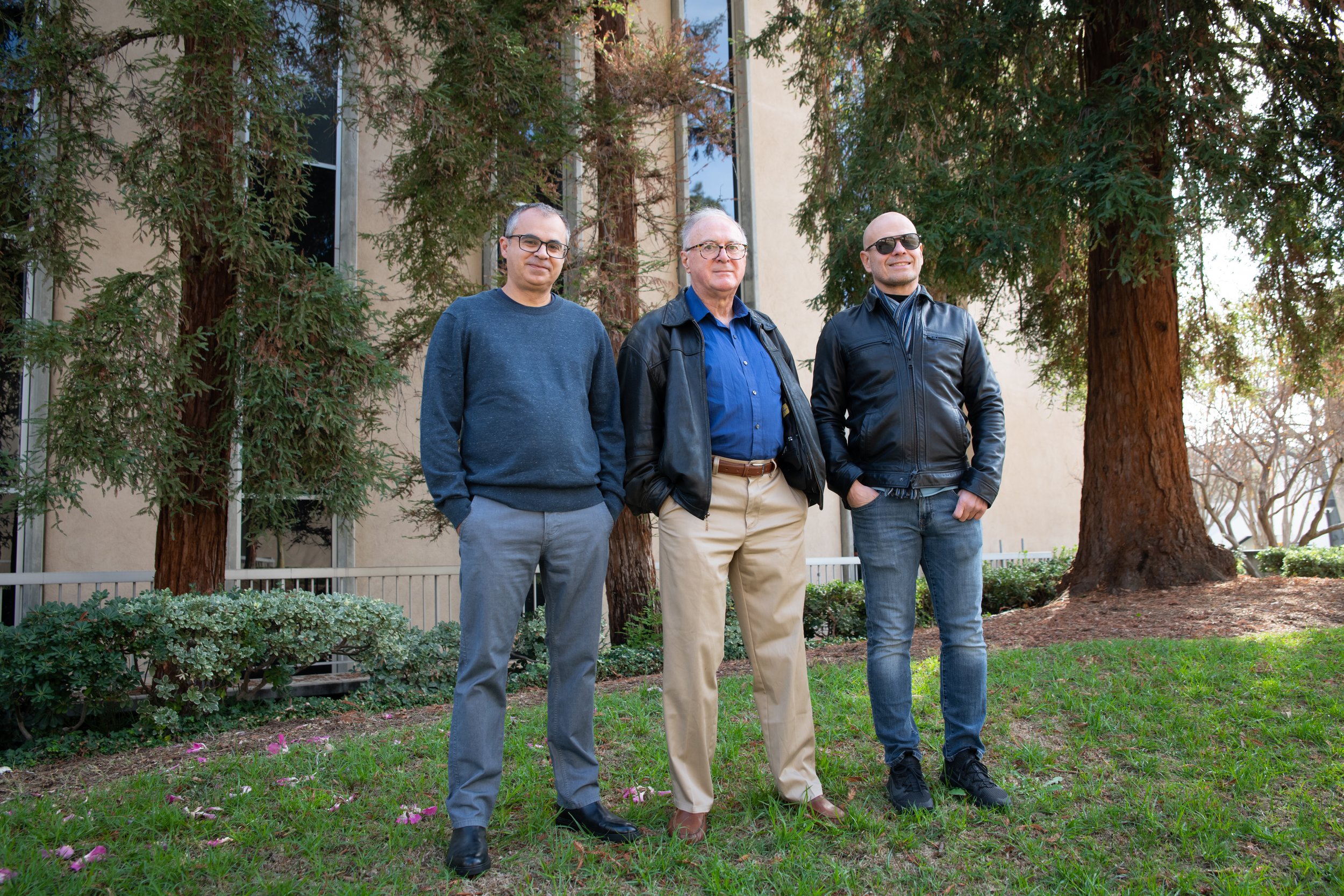
Jonas Zmuidzinas

Jonas Zmuidzinas (BS ’81), the Kingsley Professor of Physics and Caltech’s project scientist for CCAT.

Sis opens the submillimeter

Our story begins in 1979, when Bell Labs’ Tom Phillips—now Altair Professor of Physics at Caltech—invented the superconductor-insulator-superconductor, or SIS mixer. The SIS mixer was crucial to the development of radio-style receivers for the submillimeter band, and it is now used in nearly all submillimeter- and millimeter-wavelength telescopes. “It made sensitive high-resolution submillimeter spectroscopy and interferometry a possibility,” says Zmuidzinas.

An SIS mixer channels photons to a tiny junction made of two layers of superconducting metals, each just a tenth of a micrometer thick, separated by a smear of insulation. Excited by the photons, electrons leap across the insulator by quantum tunneling, generating a measurable current with extremely low noise. John Tucker (BS ’66) developed the theory behind these mixers, predicting that their noise levels could be reduced to the fundamental limits set by quantum mechanics.

Phillips, who had been a visiting associate at Caltech, joined the faculty that year. Once installed in Caltech telescopes, his prototype SIS receivers demonstrated fantastic potential, convincing JPL to dedicate researchers and lab space to the project. The CSO also sped ahead—its SIS receivers caught their first photons in 1987. JPL opened its Microdevices Laboratory in 1988, and the new facility turned physicists’ heads nationwide.

One of those physicists was Zmuidzinas, then a postdoc in Illinois. He was designing ways to force-feed photons to an SIS junction with minimal losses. He had refined a device called a twin-slot mixer, in which two antennas collect light and guide it into microstrips made with superconducting metals.

Zmuidzinas returned to Pasadena in 1990. “Caltech was irresistible. The CSO had recently been completed. The Microdevices Lab had just opened, so there was a beautiful facility for doing this work.” Today, descendents of the twin-slot are used in the Herschel Space Observatory’s spectrometers and in the CSO’s high-frequency instruments.

Spiderwebs and SIN

A few years later, Zmuidzinas focused on the problem of finding distant submillimeter-bright galaxies, which would require a camera with at least a hundred detectors—one per pixel. At the time, the workhorse detectors were germanium bolometers. Bolometers, which are used in both cameras and spectrometers, absorb incoming photons and convert their energy to heat, which an electrical thermometer then converts to a measurable electrical signal.But the devices were laboriously assembled by hand. Zmuidzinas wanted to solve the problem by combining his twin-slot antennas with a new bolometer based on superconductor-insulator-normal (SIN) junctions that had just been invented by a UC Berkeley student. With this approach, the entire detector array could be produced by lithography—no hand-assembly needed!

At that time, the late Andrew Lange, then a professor at Berkeley, and his student Jamie Bock were developing the spiderweb bolometer, a refined germanium bolometer in which everything could be mass-produced except the thermometer. The web, less than half the diameter of a dime, was photolithographed, gold-coated silicon nitride. The spider—the thermometer—was hand-placed in the middle. When the silicon backing material was etched away, the spider and web hung in free space, suspended on thin guy lines. Lange began a sabbatical at Caltech in 1994; when he decided to stay, Bock joined JPL as a postdoc. JPL’s Microdevices Laboratory was just what they needed: “They had prototyped the device at Berkeley, but they needed good facilities to make a go of it,” says Zmuidzinas.

Lange, Bock, and Zmuidzinas started down both paths—spiderwebs and SIN—but soon focused on the spiderwebs. They were more of a known quantity, and Lange and Bock wanted to create a working instrument quickly for upcoming experiments. Spiderweb bolometers made cameras faster and more accurate—they had more detectors and needed fewer photons to produce a measurable signal, and cosmic rays and the heat and shaking of nearby equipment affected them less. The 1998 BOOMERanG experiment, co-led by Lange, used them to provide the first experimental evidence that the universe is flat and that the “inflationary theory” is correct (see “An Ultrasound Portrait of the Embryonic Universe,” in E&S 2000, No. 3). Similar bolometers are flying on the Herschel and Planck observatories—326 on Herschel and 52 on Planck. They were also used in a 144-pixel camera installed on the CSO in 2002.

The missing redshifts

In 1998, a UK team at the James Clerk Maxwell Telescope—located on the summit of Hawaii’s Mauna Kea, just a few hundred yards from the CSO—announced that they had found distant submillimeter-bright galaxies. They had used hand-assembled, thread-suspended, pre-spiderweb bolometers. “It was a brute-force, inelegant solution, but they got there first,” Zmuidzinas says.

The galaxies proved to be very faint and difficult to study at other wavelengths. In particular, their redshifts—usually measured with optical spectroscopy—remained largely unknown. Zmuidzinas started to think about how to make a submillimeter spectrometer with enough bandwidth to measure redshifts for distant galaxies.

In an optical spectrometer, a grating diffracts incoming light, bouncing it to an array of detectors. The longer the light fans out before it hits the detectors, the more the resolution improves—but the instrument also gets larger. This becomes a serious problem in the submillimeter band, because the wavelengths are about a thousand times longer than in the optical. Hoping to shrink the instrument back down, Zmuidzinas considered confining the light in superconducting circuitry on a silicon wafer, similar to an ordinary printed circuit board. This would address the problem—the metal circuitry would confine the light vertically and also slow it down, reducing the required path lengths considerably. But experiments initiated by undergraduate Chiyan Luo (BS ’00) showed that the circuitry would lose too many photons.

Meanwhile, Jamie Bock, by then a JPL research scientist, was also trying to make a better submillimeter spectrometer. He was looking into instruments that bounced light the old-fashioned way, with mirrors and lenses. But they were proving to be unmanageably large, so Zmuidzinas suggested a compromise using a machined-metal version of the superconducting spectrometer.

In 2000, Bock and Zmuidzinas joined forces to develop a new instrument that would draw on each of their approaches, and they were soon joined by Millikan Postdoctoral Fellow Matt Bradford, graduate student Bret Naylor (PhD ’08), Hien Nguyen at JPL, and collaborators at other universities.

In Z-Spec, the resulting spectrometer that was first installed on the CSO in 2005, feedhorns funnel light into the 2.5-millimeter gap between two parallel metal plates, each more than a foot on a side. The light hits a faceted, arc-shaped grating, splintering off to be caught by 160 bolometers—variations on the spiderweb concept.

Z-Spec’s bandwidth—on par with that of optical spectrometers—is over ten times larger than that of previous submillimeter spectrometers. The instrument recently measured redshifts of several distant, dust-obscured star-forming galaxies discovered with Herschel.

Of SQUIDs and MKIDs

The story doesn’t end with the smashing success of the spiderweb bolometers and Z-Spec. In fact, Lange and Bock’s progress on the bolometers had left one box unchecked: “We didn’t fulfill the vision of producing large arrays of detectors purely by lithography,” Zmuidzinas says. It’s a frequent quandary—do you spend more time on a new tool that can scale up, or do you prioritize the ability to do interesting science right away? The spiderwebs had mostly solved the issue of hand-assembly, but placing the thermometers and installing the wiring was still delicate and labor-intensive. In the late ’90s, Zmuidzinas returned to the challenge of making a camera with simple wiring and thousands of mass-producible detectors.

Kent Irwin (BS ’88) had made progress on this problem, in the meantime, when he found a simple, practical way to make use of superconducting bolometers as a Stanford graduate student in 1995. Called transition edge sensors, his bolometers used strips of superconducting metal films as thermometers. Small temperature changes in the strips reliably yielded measurable changes in resistance, once Irwin drew on the design of stereo amplifiers to keep the strips within a working temperature range. Then, in 1999, in his first job, Irwin and collaborators (including Erich Grossman, PhD ’88) developed readout multiplexers using superconducting quantum interference devices (SQUIDs) that simplified the wiring for large bolometer arrays. Arrays of these detectors, incorporating novel antennas inspired by Zmuidzinas’s work, are being developed at JPL for studying the cosmic microwave background and for sensitive spectroscopy from space.

It was a breakthrough, but the SQUID multiplexers seemed complicated to Zmuidzinas. The SQUID approach works well for certain applications, but it wouldn’t scale up to the large detector count needed for CCAT’s cameras. He and JPL’s Rick LeDuc discussed the problem at a coffee shop near campus. LeDuc wondered: “Can’t we use kinetic inductance somehow?”

This was a lightning bolt for Zmuidzinas. Back in his office, he scanned the literature. Photons absorbed by a superconductor would produce quasiparticles. A quasiparticle population boom would change the superconductor’s inductance, which would change the circuit’s resonant frequency. Perhaps he and LeDuc could design a lithographed superconducting resonator and use its frequency change as the detectable response. Each resonance would be sharp, occupying a narrow range of frequencies. You could tack resonators next to each other on one readout wire, maybe into the thousands. There was no theoretical ceiling for the quality of each resonator.

Spiderweb BolometerMKID Detector Array

Left: A spiderweb bolometer sits on a dime.
Right: Titanium nitride Microwave Kinetic Inductance Detectors, or MKIDs, of the type under development for CCAT’s camera. The active area (pictured) is about a centimeter across, or roughly the size of the chip in which the spiderweb bolometer is suspended, but this MKID has a 16 × 16 pixel array instead of a bolometer’s single sensor.

Resonant Interactions

Zmuidzinas and LeDuc shared the idea with Tom Tombrello, Caltech’s Kenan Professor and then chair of the Division of Physics, Mathematics and Astronomy. Tombrello spoke with then provost Steve Koonin, who connected him with trustee Alex Lidow (BS ’75)—who provided substantial seed funding. “Lidow’s gift came at a critical time for us—it allowed us to get the equipment we needed and get set up to do this in the right way,” Zmuidzinas says. Prominent researchers from Caltech and JPL, as well as other universities, signed on to the effort. Koonin and Tombrello also talked with JPL’s Jakob van Zyl (PhD ’86), who helped move the project ahead.

JPL’s Peter Day (PhD ’93) suggested making the resonators using a structure called a coplanar waveguide, etched from a superconducting metal film deposited on a silicon wafer. In the resulting resonators, the distance covered by the microwaves as they bounced back and forth totaled more than a kilometer!

“They were getting Q’s (a quality factor related to path length) of a million-plus,” says Keith Schwab, an applied physicist at Caltech. “People in quantum computing and applied physics couldn’t believe it. It’s had a big impact on our work. And the technology is easy to implement.”

Beyond their unanticipated benefits, the new MKID circuits actually work. The team has created a camera with 2,304 detectors—it will be installed on the CSO in the fall of 2011. In development are new versions of MKIDs, in which the radiation is absorbed in meandering superconducting strips that also let energy slosh back and forth between inductors and capacitors. They will have Q’s in the tens of millions. These MKIDs rely on superconducting titanium-nitride films, a choice suggested by LeDuc. They are very simple, dropping costs and enabling fabrication of extremely large cameras for CCAT.

The invention is also inspiring new applications: Caltech physicist Sunil Golwala is exploring ways to use titanium-nitride MKIDs to detect dark matter, Ben Mazin (PhD ’04) is developing optical-wavelength versions for astrophysics, and Zmuidzinas and Day hope to use the material to make a nearly ideal microwave amplifier. These ongoing efforts are supported by the Keck Institute for Space Studies and by the Gordon and Betty Moore Foundation, which also enabled earlier detector work.

“As you can see, you bounce around and it takes a while to land on the right idea,” says Zmuidzinas. The instruments at the heart of CCAT will bring decades of work to fruition. Looking back, Zmuidzinas reflects, “There are always such surprising connections. Who would have thought that trying to look for submillimeter galaxies would spark an idea useful in quantum computing? But that’s how research works. There are deep, hidden connections among fields. We all learn from each other.” —AW

Below: If the human eye could see submillimeter light, this is how the skies over the CCAT telescope would look. CCAT will be built atop Cerro Chajnantor in Chile’s Atacama desert—at an elevation of 5,612 meters, one of the highest and driest places on Earth. This is essential, as water vapor absorbs submillimeter waves.

CCAT Dome