


California Institute of Technology
Engineering & Science
05.16.12

Random Walk

Better Than a Poke in the Eye

For most of human history, cataract surgery has consisted of pushing the clouded lens aside or scraping it out altogether with a needle jabbed into the patient’s eyeball. A lensless eye was better than a blind one; at least the patient could make out shapes and colors. Today’s techniques are slightly less cringeworthy and considerably more effective. They generally involve fragmenting the lens with ultrasound, and implanting a synthetic replacement through a tiny incision in the cornea— the clear part of the eyeball.

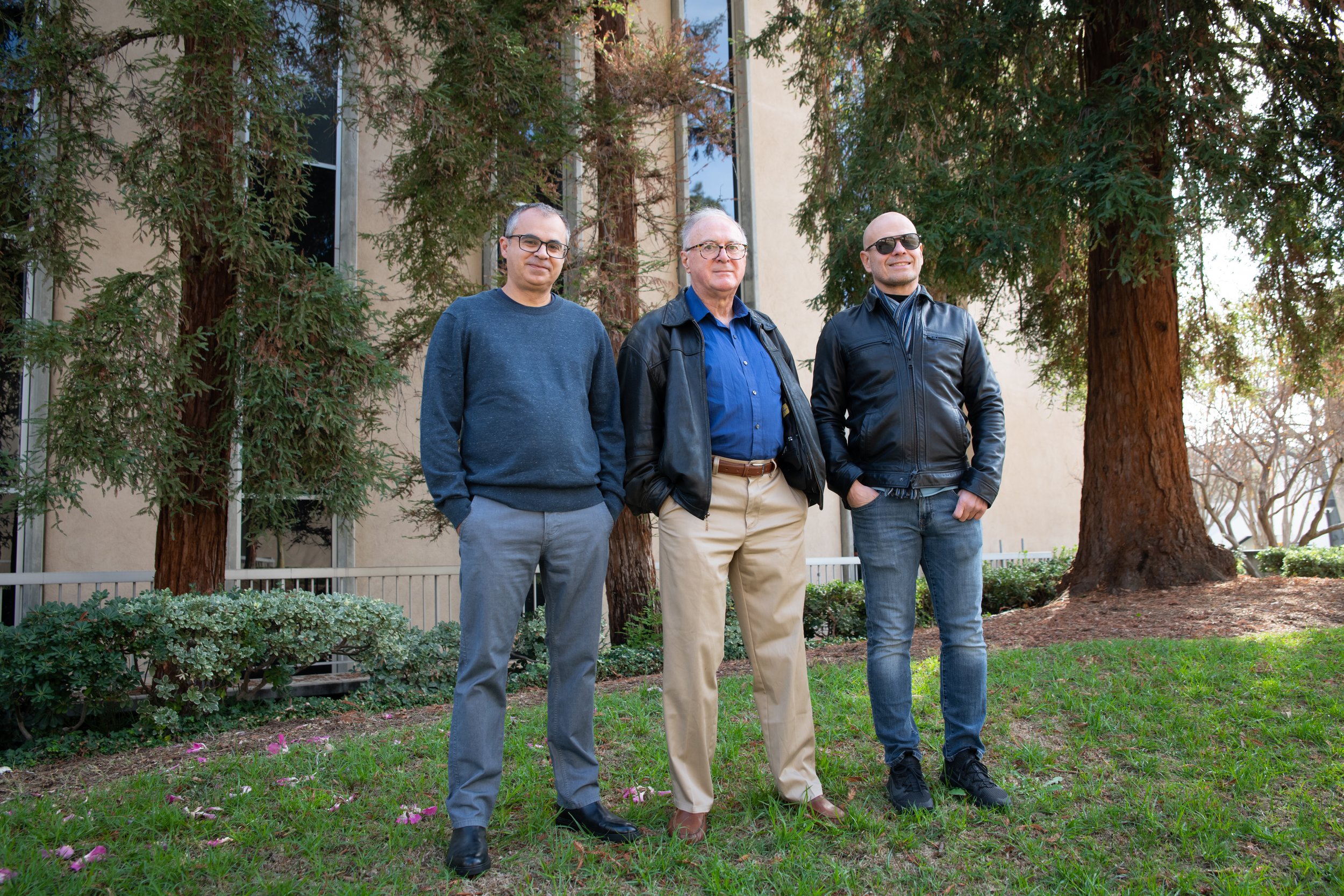
Like contact lenses, these implants can be made of hard or flexible plastic; and like contact lenses, the prescription is “baked in” when they’re manufactured and can’t be altered later. Not so with the laser-adjustable lens (LAL), whose optical properties can be fine-tuned days or weeks after surgery. The LAL is the product of a multi-institute collaboration that includes Daniel Schwartz, an associate professor of ophthalmology at UC San Francisco, as well as Caltech’s Robert Grubbs and Julia Kornfield (BS ’83, MS ’85). Grubbs, a 2005 Nobel laureate, is the Atkins Professor of Chemistry; Kornfield is a professor of chemical engineering. Kornfield studies how a polymer’s microscopic structure dictates its macroscopic properties; Grubbs is an expert on making polymers to order.

Kornfield and Grubbs make their implants from photosensitive macromers (short-chain polymers), allowing the lenses’ optics to be tweaked post-op. (See “Squishy Is Good,” E&S 2002, No. 2.) Once the incision has healed, there’s a follow-up eye exam. Then the ophthalmologist briefly illuminates selected regions of the lens with a pattern of near-ultraviolet light. This activates the macromers in those areas, creating a chemical imbalance that osmotically attracts free macromers from nearby regions. Over the next day, the influx of material alters the lens’s shape, and thus its refractive power. A final lenswide dose of ultraviolet light locks in the new configuration.

Although the LAL isn’t yet approved for use in the United States, it’s taken off overseas. “Sales in Europe are doing well,” Grubbs remarks. Meanwhile, recent clinical trials have confirmed the lens’s ability to correct astigmatism. Says Kornfield, “It’s exciting to be involved in a technology that might soon be giving people over 45—like me!—near and distance vision without glasses or contacts.”

So keep an eye out—er, as it were. —DZ